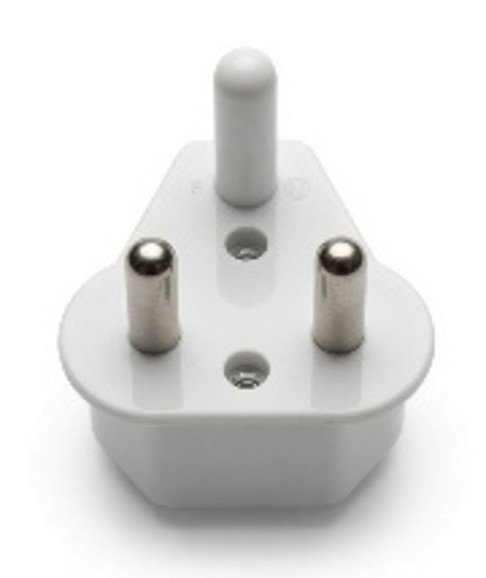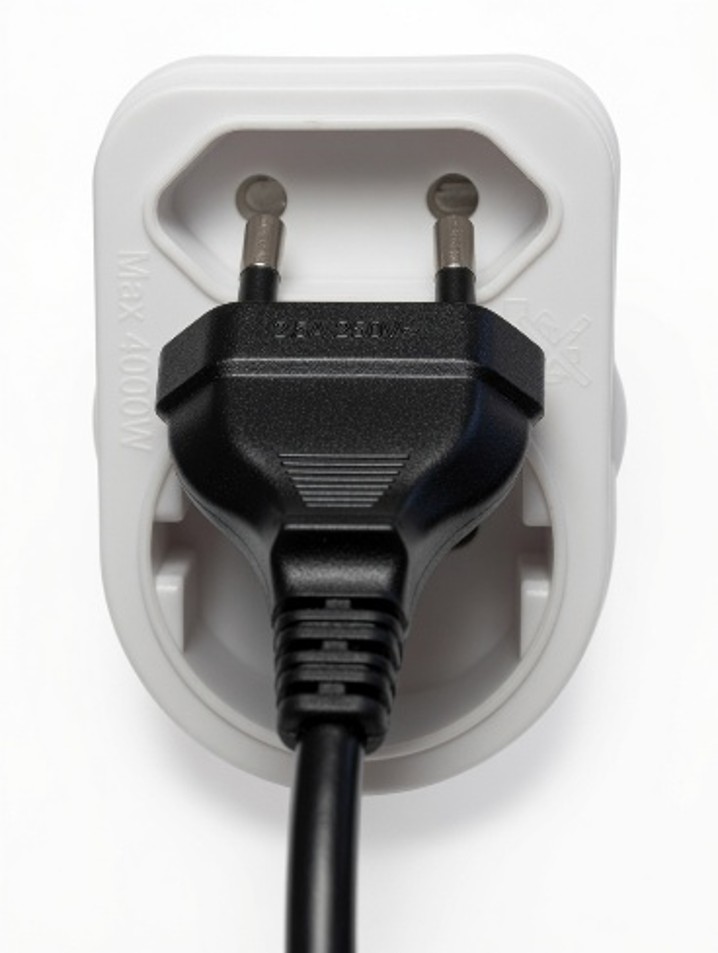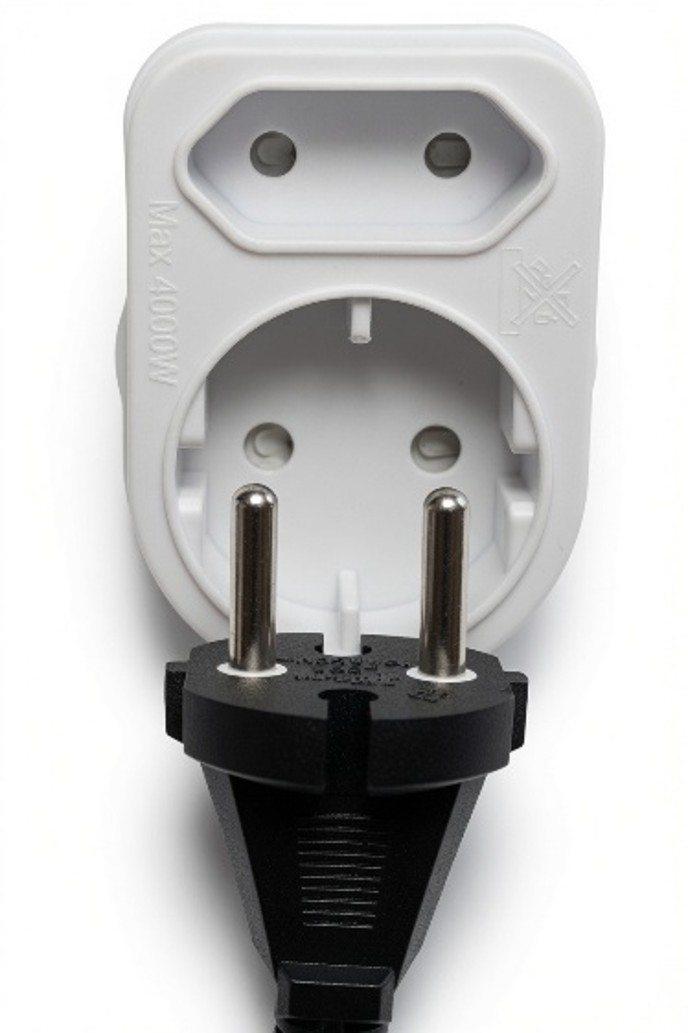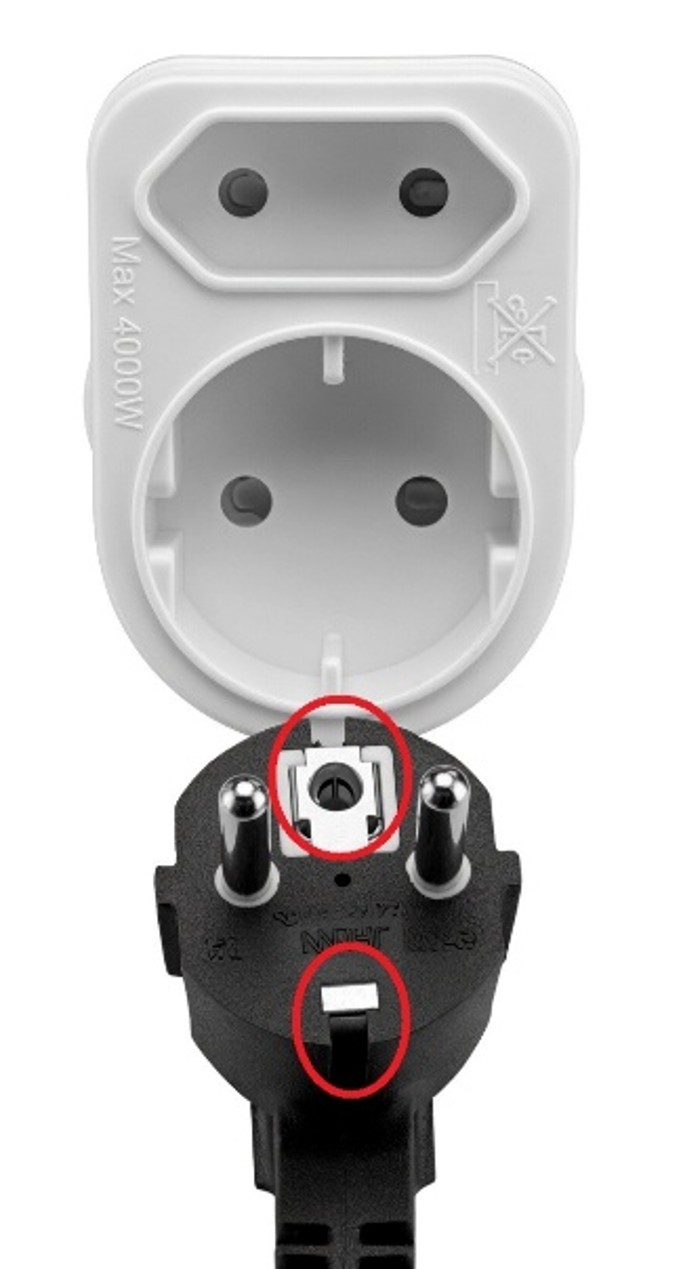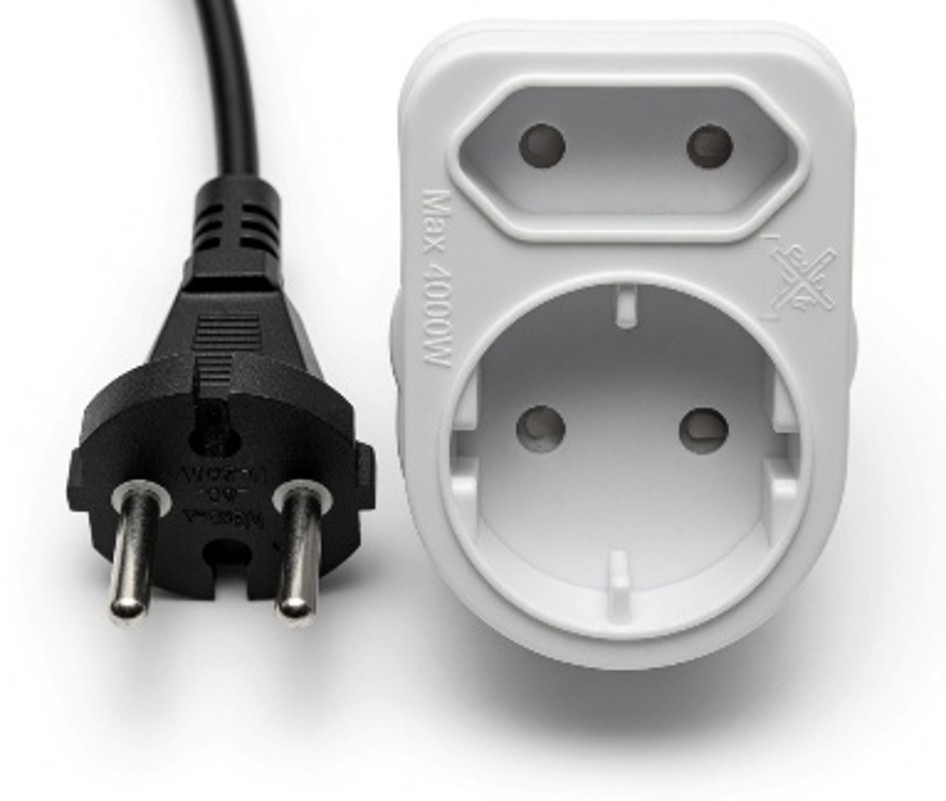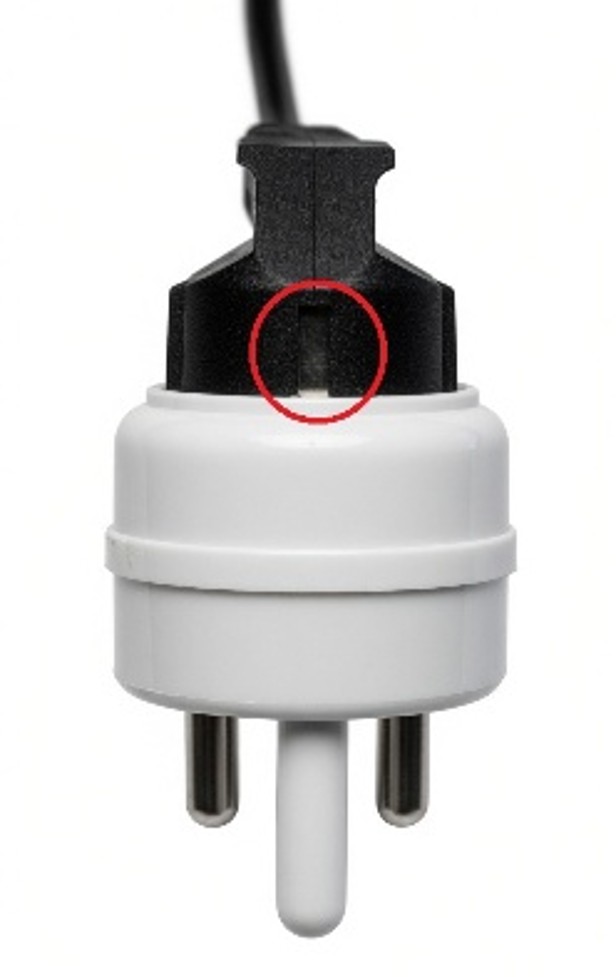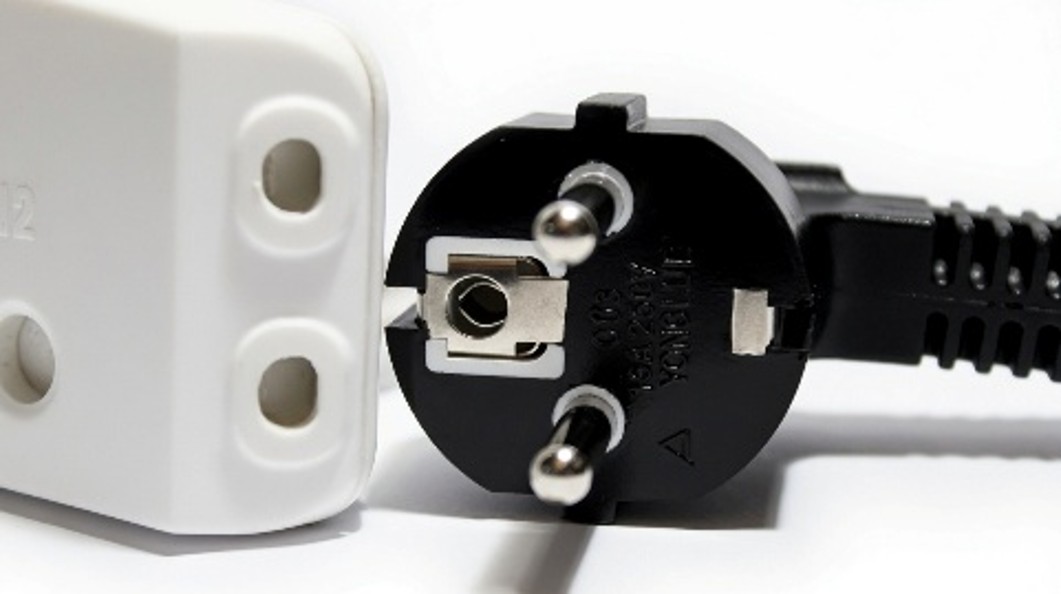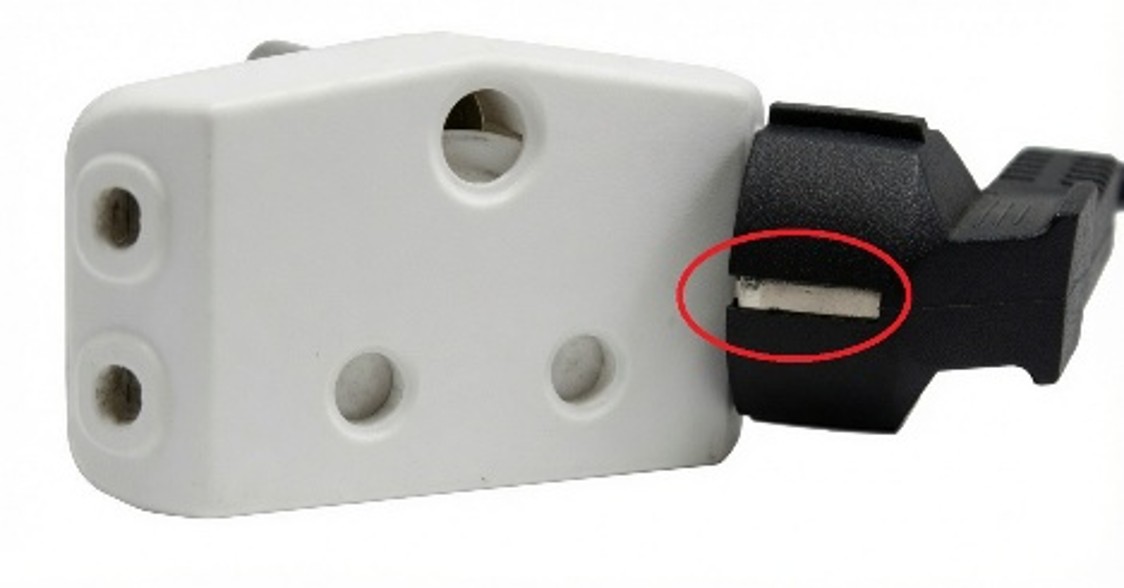
South African wall plates are often designed with two switches above two socket outlets, side by side.
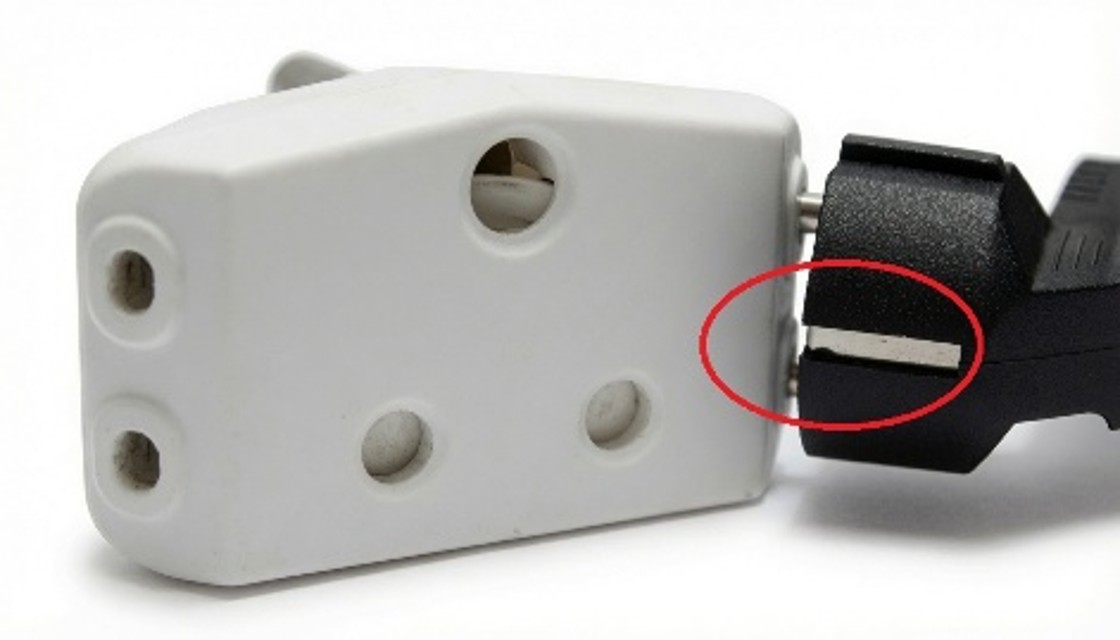
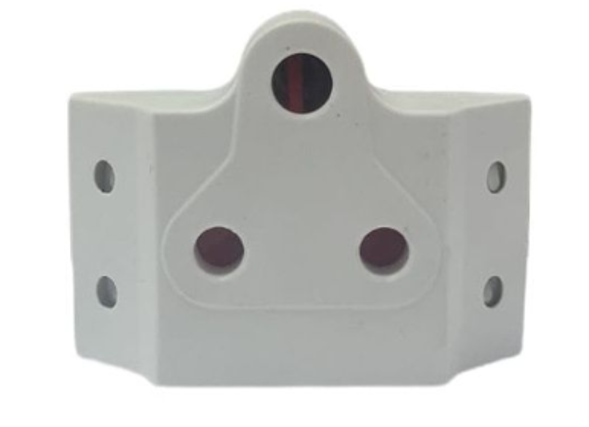
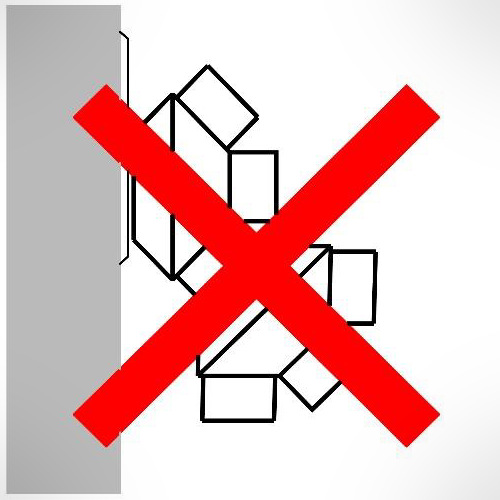
This setup is useful in the home, but it can create a problem when a bulky adaptor is plugged into one outlet. If the adaptor is too large or badly shaped, it can cover the neighbouring outlet, rest on a switch, or hold a switch in a halfway position.
That is exactly what the restricted encroachment area is designed to prevent.
In simple terms, the rule exists to make sure that plugs, adaptors and switches do not block one another. It helps ensure that an adaptor can be used without interfering with the other parts of the wall plate.
This article explains what the restricted encroachment area means, why it matters, and what consumers should look for before buying or using an adaptor.
What does “restricted encroachment area” mean?
The restricted encroachment area comes from the SANS 164 standard sheets, including SANS 164-2, which is the preferred compact 16 A plug and socket system in South Africa.
The standard shows a restricted zone around each socket outlet face. Nothing from another plug or adaptor should enter that space if it prevents a plug or adaptor from fitting properly, or if it interferes with a switch, overload device or indicator lamp.
The standard sheets describe the purpose of the restricted encroachment area as allowing the unimpeded engagement of plugs and adaptors. In plain language, this means plugs and adaptors must be able to fit properly without being blocked by switches, indicator lamps, overload devices or the body of another adaptor.
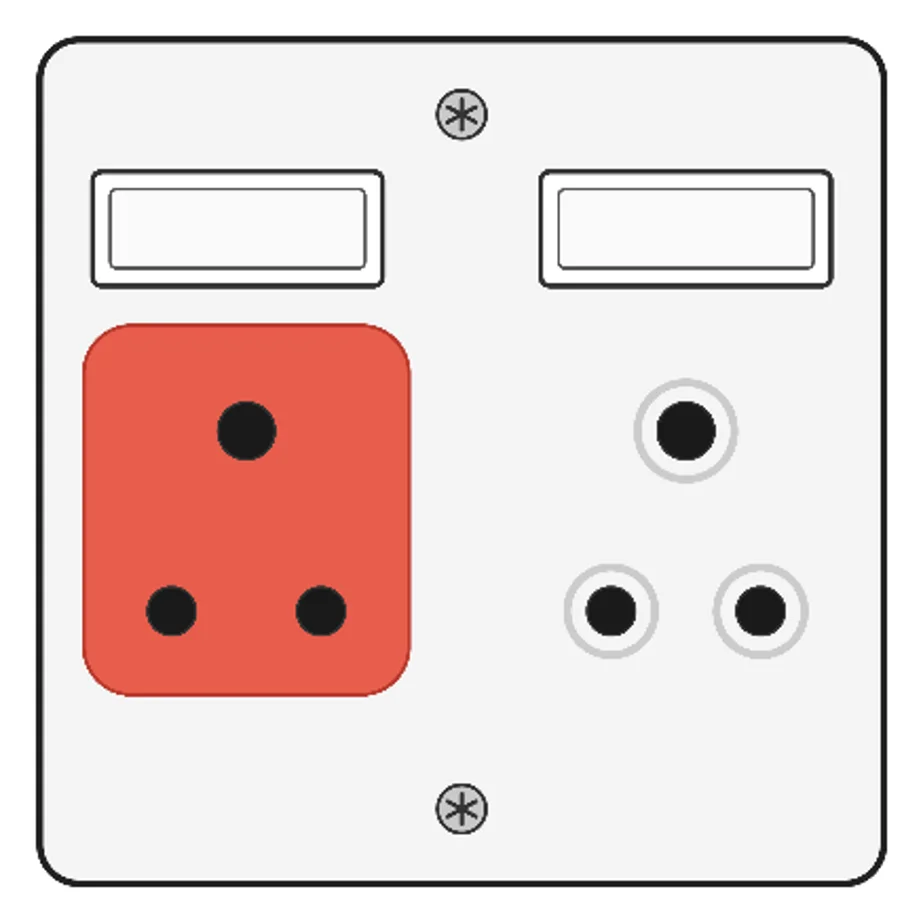
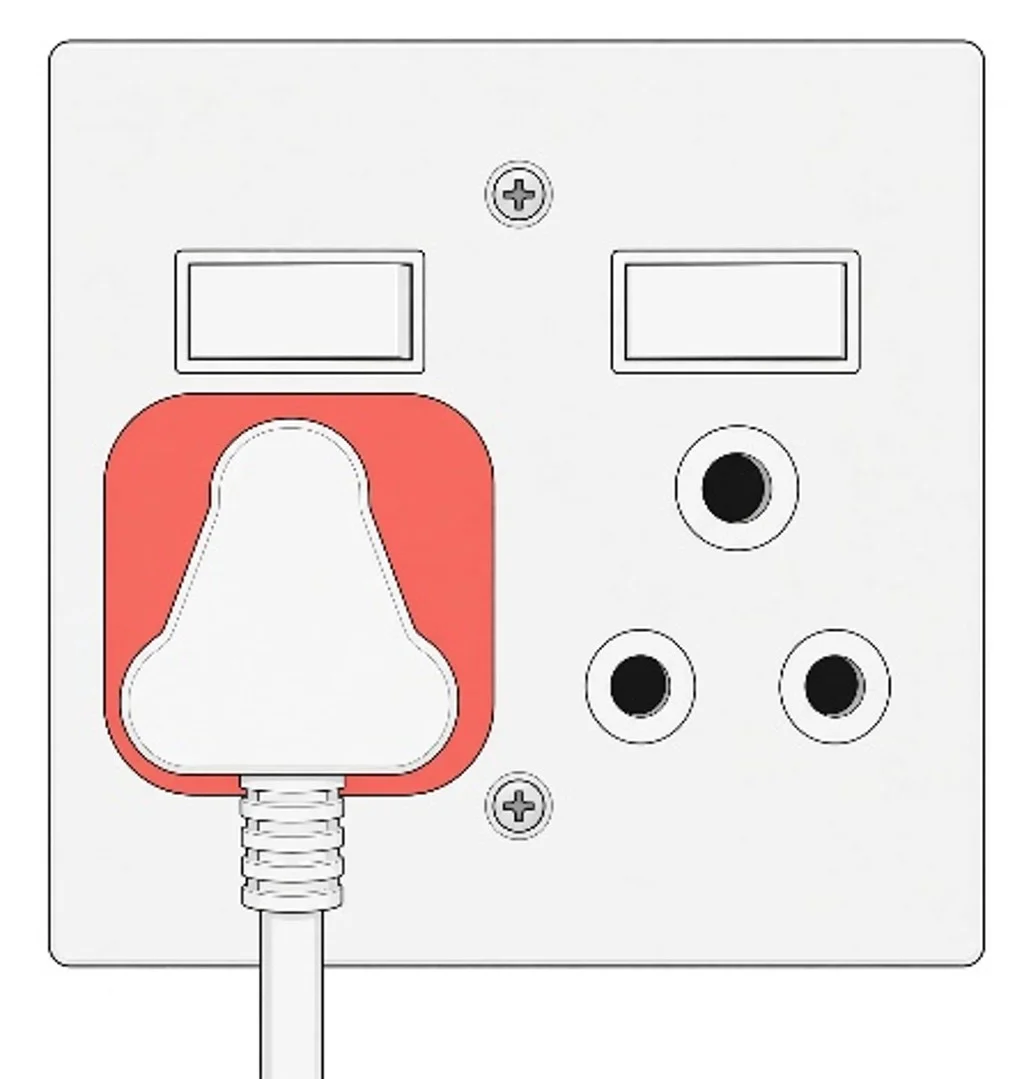
Encroachment area.
In everyday language, this means:
- The adaptor body must stay out of the neighbouring outlet’s space.
- The second outlet on the same wall plate must still be usable.
- Both switches must still be reachable.
- Each switch must still be able to sit fully ON or fully OFF.
- The adaptor must not rest on a switch or leave it half on.
- Any switch, overload device or indicator lamp must remain clear and usable.
If an adaptor blocks the outlet next to it, or stops a switch from working properly, it may not meet the restricted encroachment requirement.
Why this rule matters
This may sound like a small design issue, but it can become a real safety concern.
If an adaptor body covers the next outlet, that outlet cannot be used properly. If the adaptor rests on a switch, two things can go wrong.
First, the user may not be able to operate the switch.
Second, the switch may be left in a half-made position. When this happens, contact pressure can drop, the connection can heat, and the wall plate or adaptor can burn.
That is a safety failure, not simply a cosmetic or convenience issue.
Is this a ban on multiway adaptors?
No.
The restricted encroachment area does not ban multiway adaptors.
The rule focuses on the shape and positioning of the adaptor body. A multiway adaptor can observe the encroachment requirement if it:
- fits fully into one outlet
- leaves the second outlet open and usable
- does not cover or press against the switches
- allows plugs and adaptors to connect properly
The issue is not simply how many outlets the adaptor has. The issue is whether the body of the adaptor blocks or interferes with the rest of the wall plate.
The related clearance rule
SANS 164-0 also includes a clearance requirement between the adaptor body and the socket outlet face.
This clearance was reduced from 12 mm to 8 mm. The purpose is similar: the adaptor must not ride up against a switch on the wall plate.
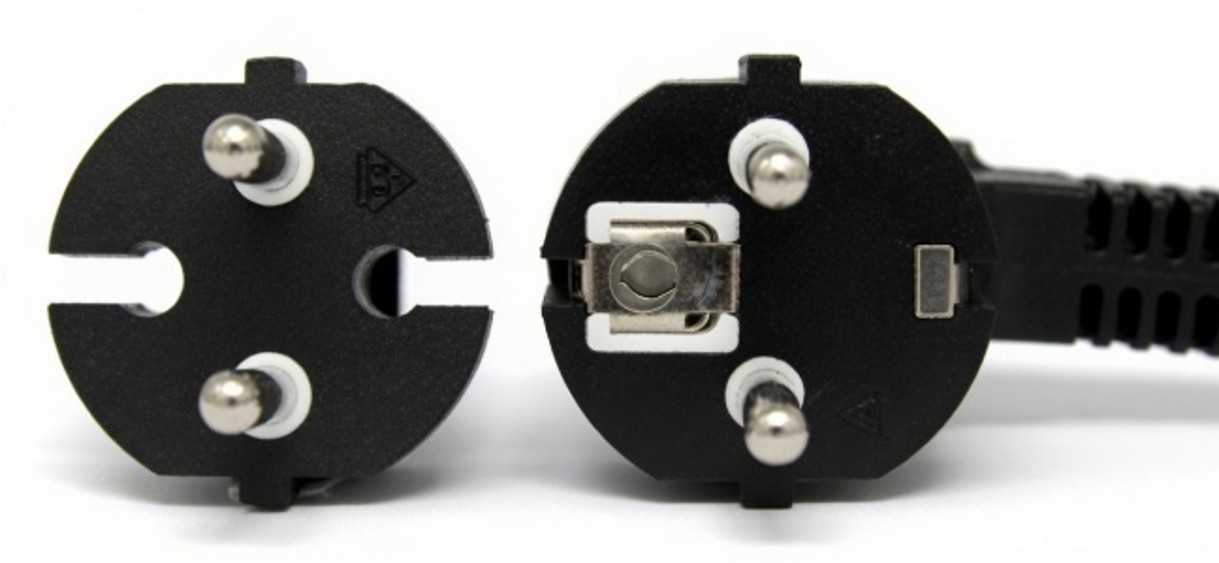
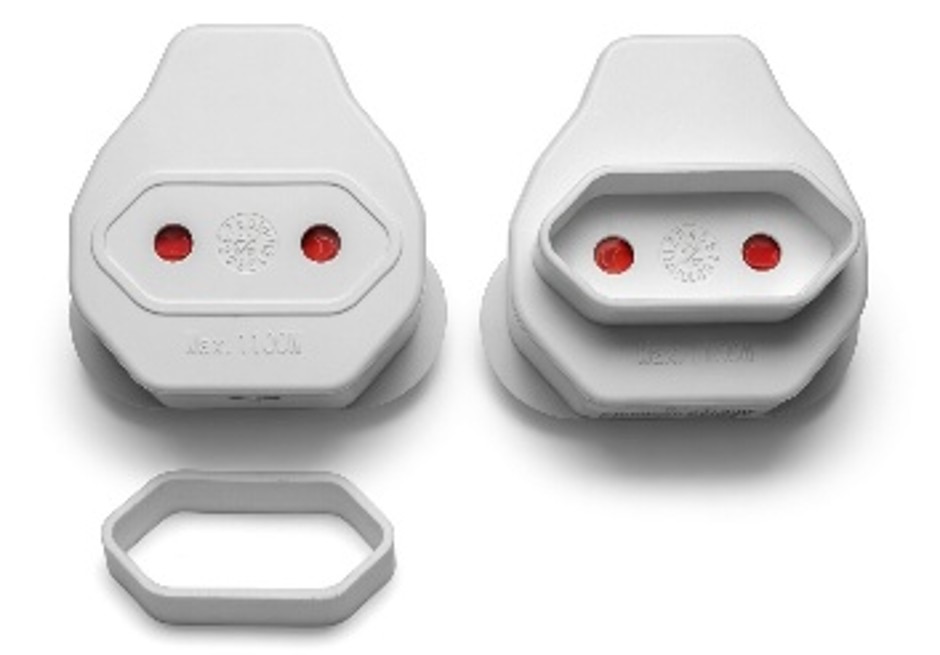
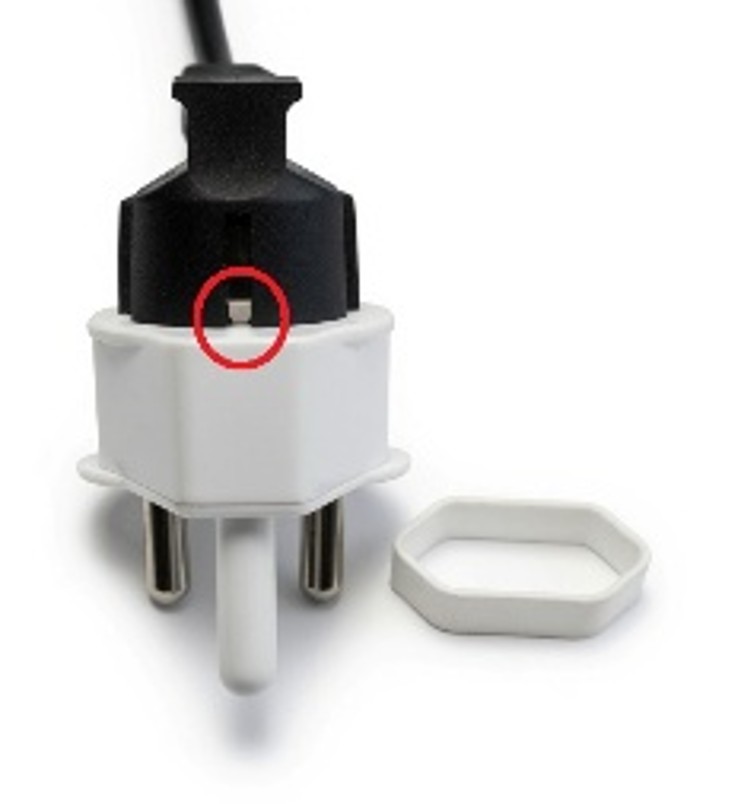
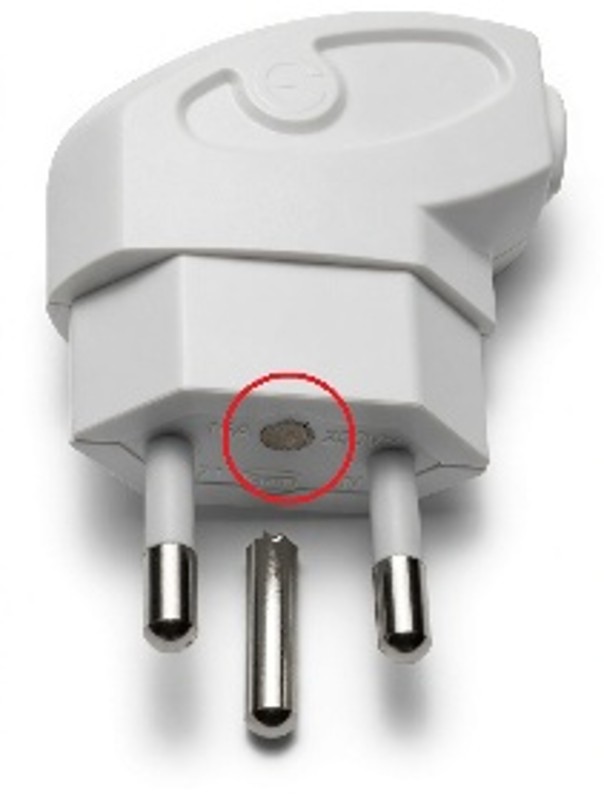
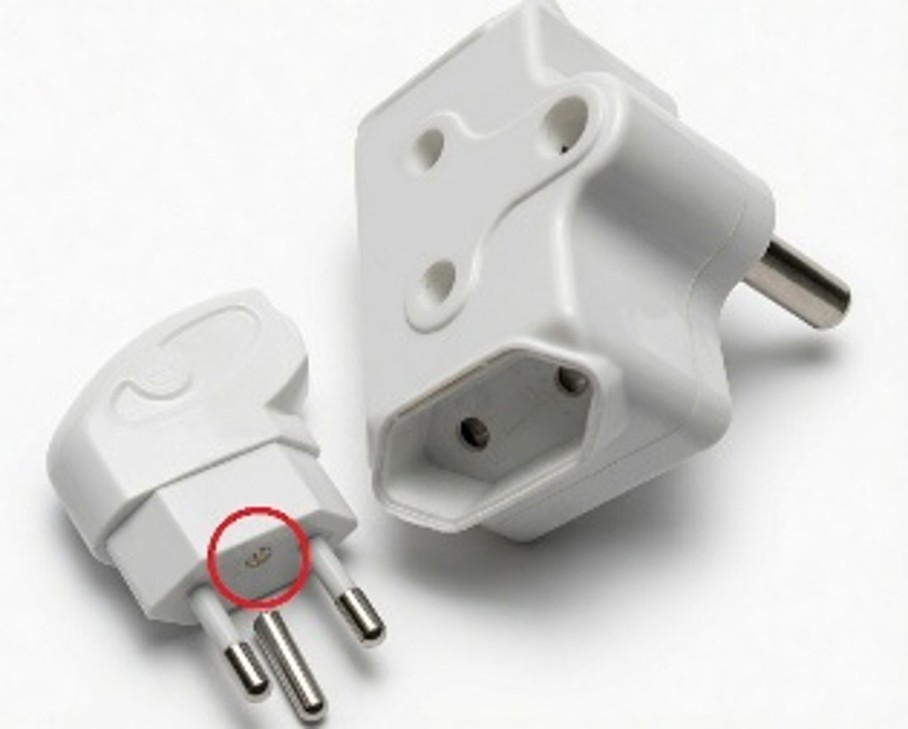
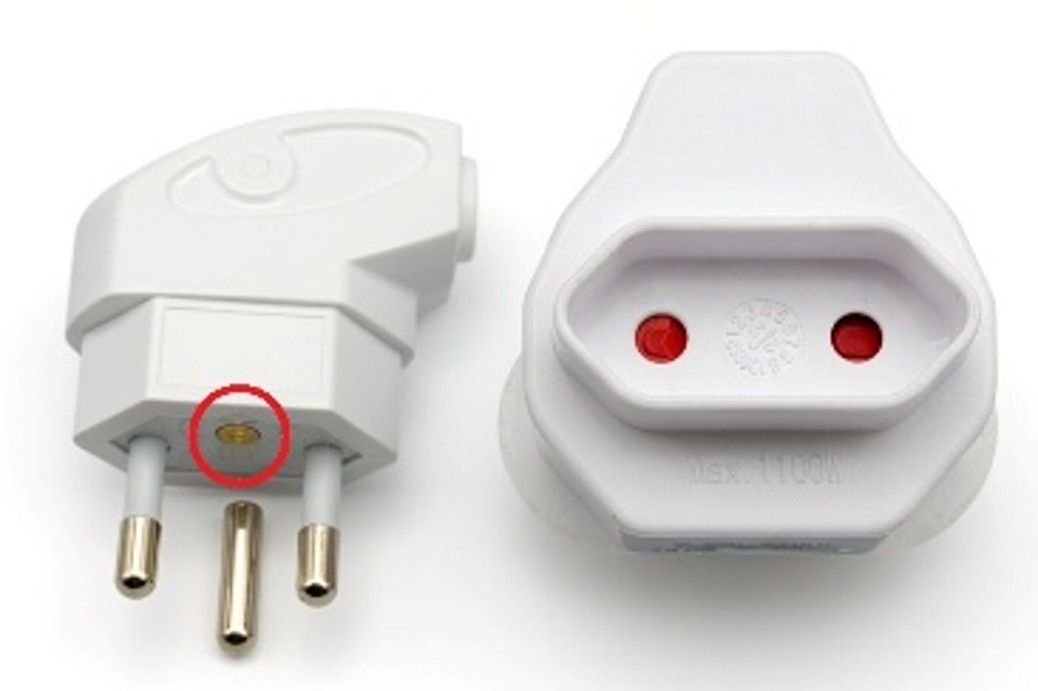
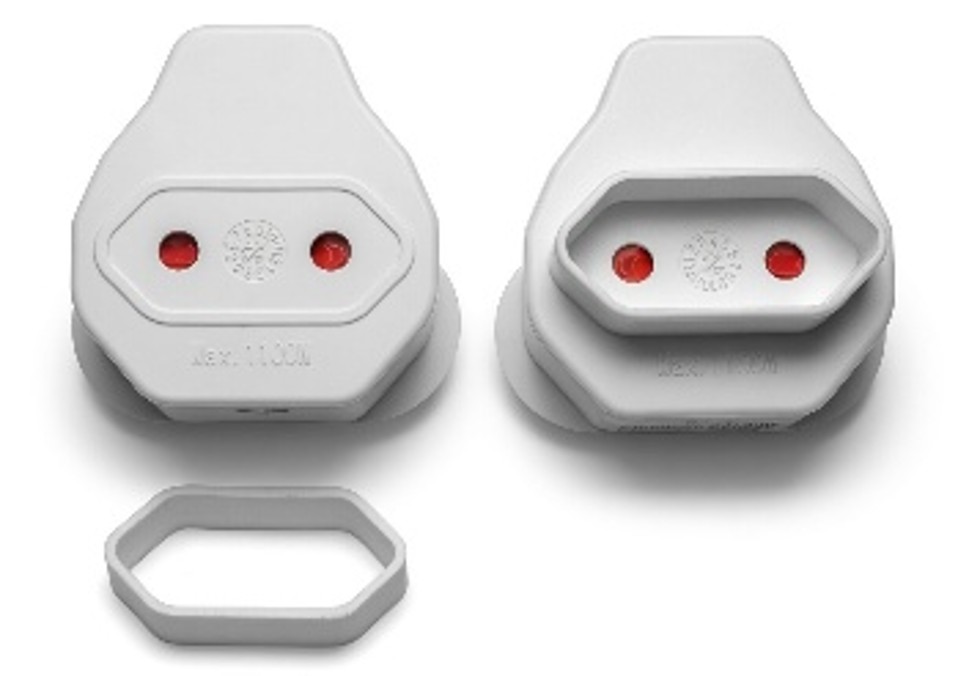
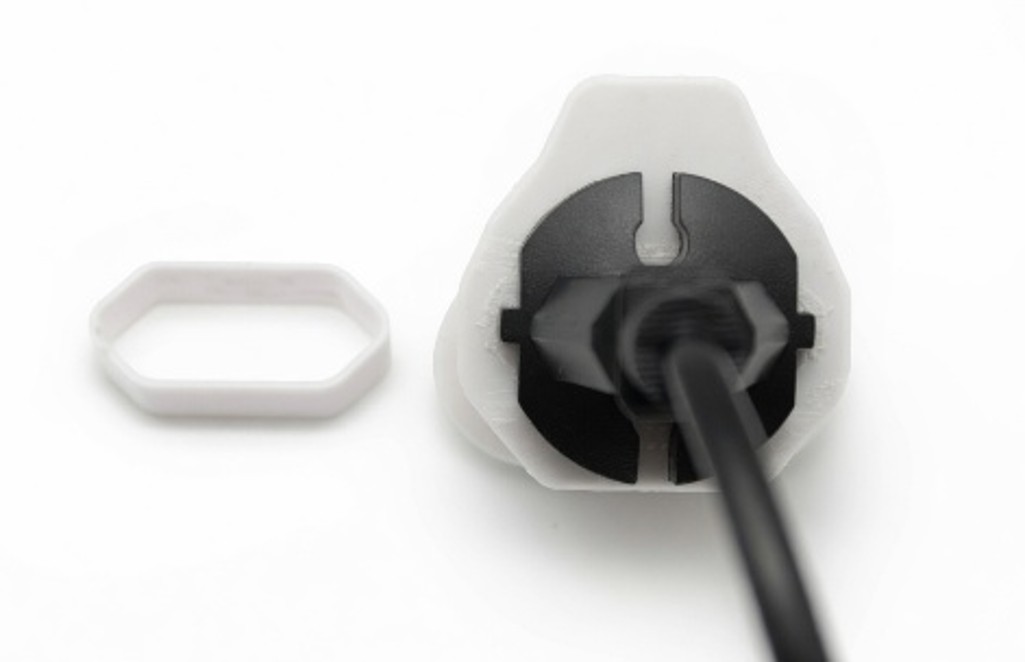
Many manufacturers meet this requirement by using a plastic step or a reduced body outline around the plug pins. This helps the adaptor sit properly in the socket without pressing into the neighbouring outlet or switches.
Together, the restricted encroachment area and the 8 mm clearance rule help prevent an adaptor from interfering with the rest of the wall plate.
What consumers should check before using an adaptor
You do not need to understand the full technical standard to spot the basic issue.
When you plug an adaptor into one outlet of a two-gang switched wall plate, check the following:
1. Is the second outlet still open?
The adaptor should not cover the neighbouring outlet.
You should still be able to insert and remove a separate plug from the second outlet without obstruction.
2. Are both switches still clear?
The adaptor should not rest on either switch.
Both switches should be easy to reach and operate.
Also check that any overload button or indicator lamp remains clear and usable.
3. Can the switches move fully ON and OFF?
A switch should not be held halfway by the adaptor body.
If the adaptor presses on the switch or prevents it from clicking fully into position, that is a warning sign.
4. Does the adaptor sit fully in the socket?
The pins should fit properly into the outlet.
If the adaptor cannot seat fully because the body hits a switch or the neighbouring face of the wall plate, it may be interfering with the restricted encroachment area.
5. Are you stacking adaptors?
Do not plug one adaptor into another.
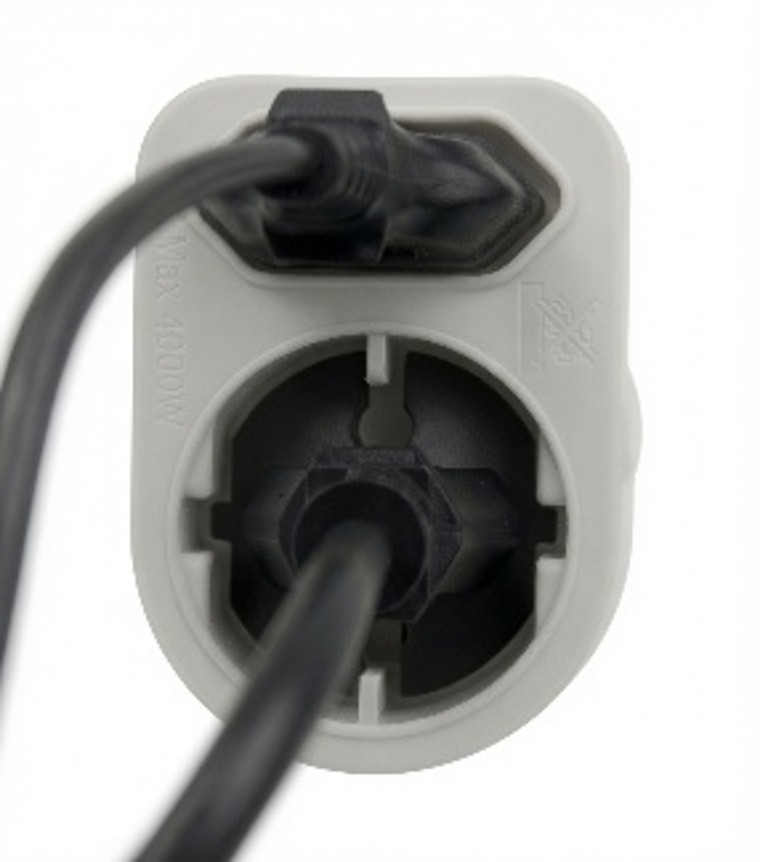
SANS 164-0 requires a warning symbol against plugging adaptors into one another, because adaptor stacking places strain on the wall outlet and increases risk.
What the encroachment rule does not cover on its own
Observing the restricted encroachment area does not automatically mean every other feature of an adaptor is compliant.
Socket-outlet adaptors sold in South Africa remain subject to the compulsory specification VC 8008 and to SANS 164-0, together with the applicable parts of the SANS 164 series.
Other important questions still apply, including:
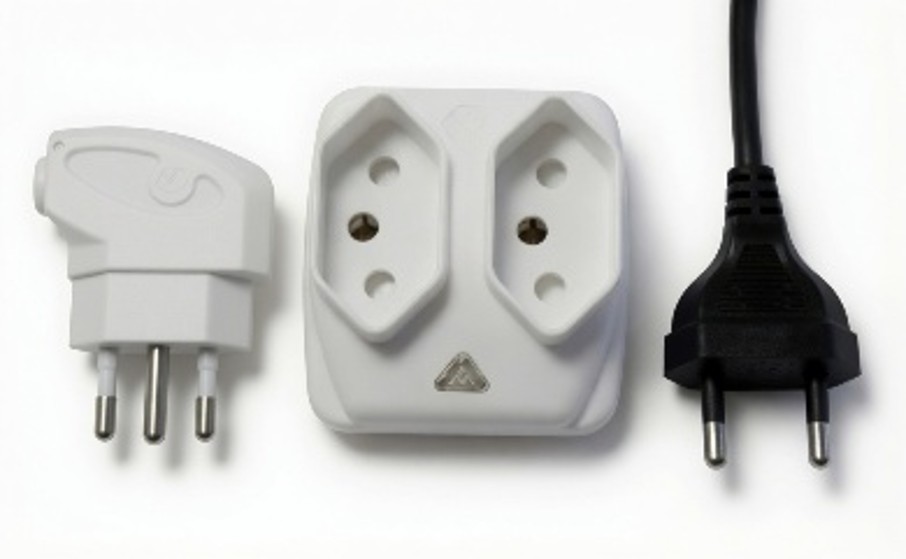
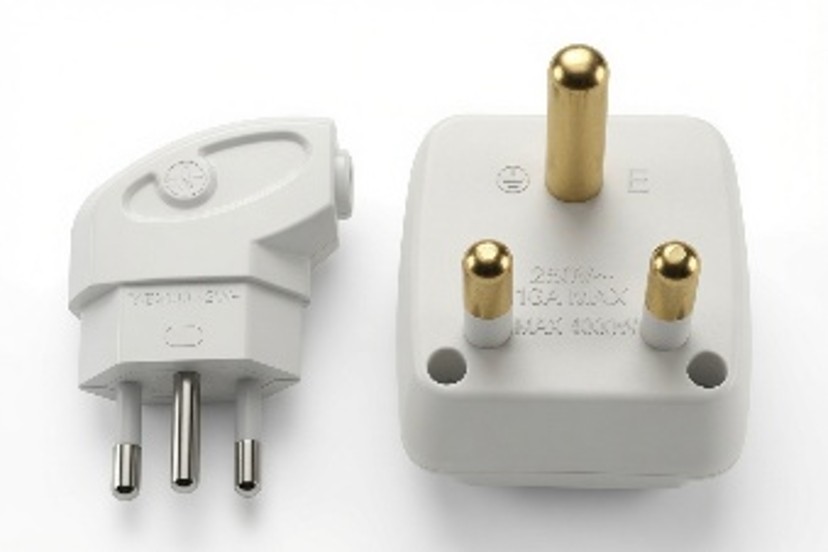
- whether the plug and each outlet on the adaptor match an allowed SANS 164 configuration, such as SANS 164-1, SANS 164-2, SANS 164-3, SANS 164-5 or SANS 164-6, as applicable
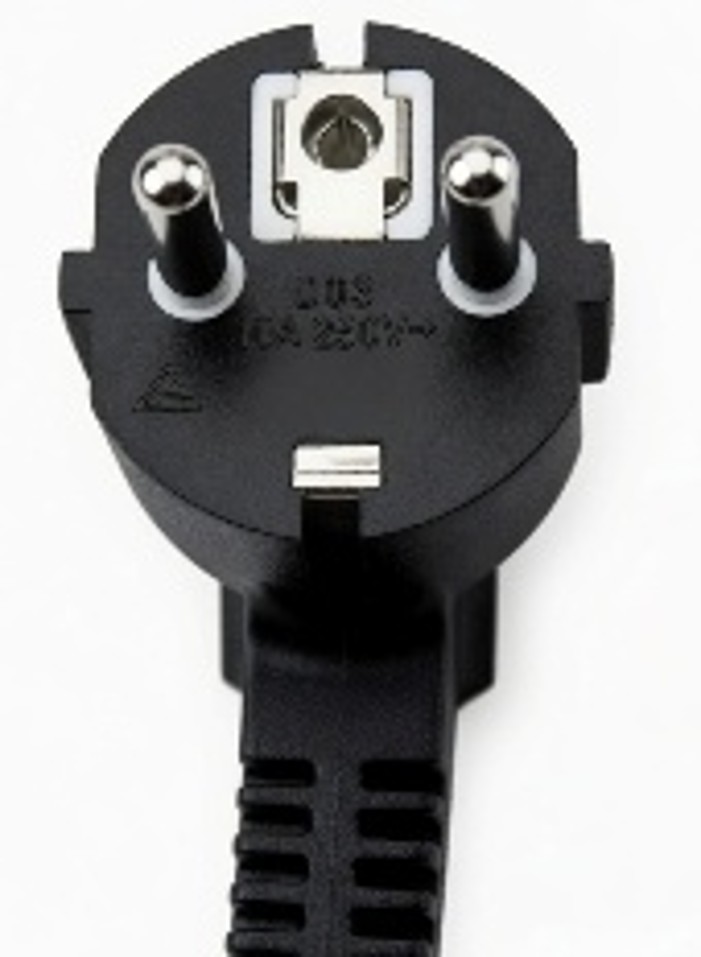
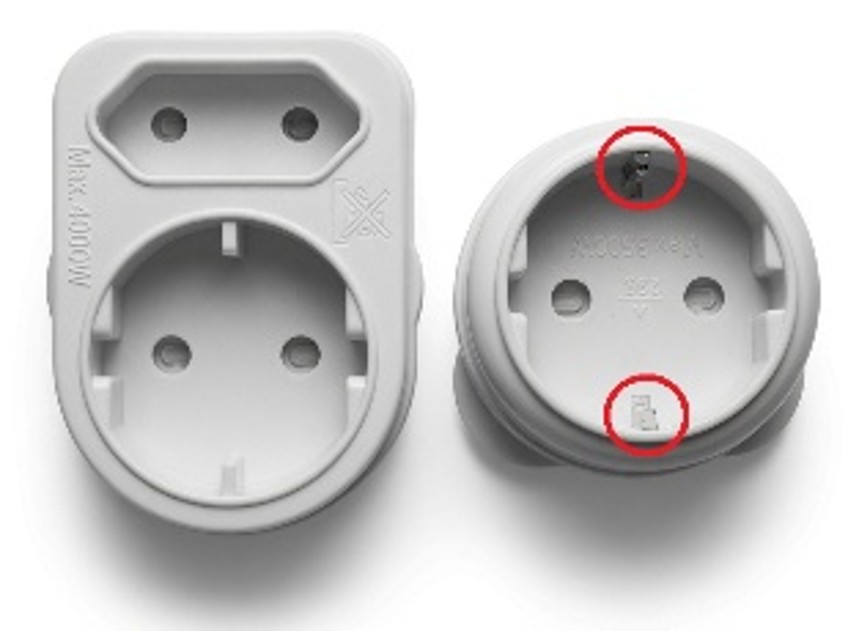
- whether unearthed Schuko-pattern outlets are present, as this pattern is not an accepted South African configuration for general household use
- whether shutters, ratings, markings and a current Letter of Authority are in place
- whether the product is being used within its current rating
- whether adaptor-on-adaptor stacking is being avoided
In other words, the restricted encroachment area is one important part of adaptor safety and compliance. It does not replace all other compliance checks.
Safehouse position
The restricted encroachment area is a published dimensional requirement. Enforcement and consumer judgement should follow that requirement.
A multiway adaptor is not non-compliant simply because it has more than one outlet.
On this point, the adaptor becomes a problem if its body:
- occupies the restricted zone
- blocks the neighbouring outlet
- interferes with a switch
- prevents the wall plate from being used as intended
Consumers, retailers and inspectors can apply the same simple check:
Plug the adaptor into one outlet of a standard two-gang switched wall plate and ask whether the other outlet and both switches still work as intended.
If they do, the encroachment rule on that plate has been observed.
If they do not, the product has failed that part of the standard.
Annexure A: Schematic examples of adaptor geometry
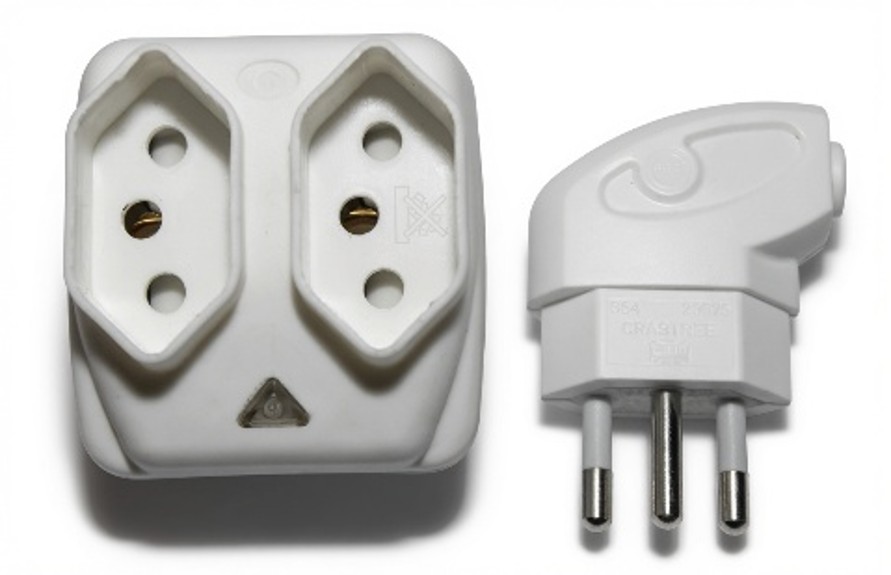
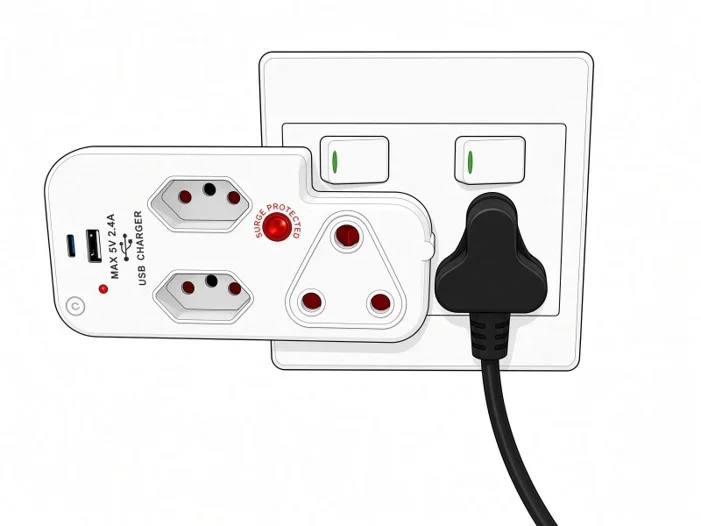
Because this rule is easier to understand visually, the schematic examples below show adaptor shapes that leave the neighbouring outlet and both switches usable.
In each example, the adaptor is plugged into the left-hand outlet of a two-gang switched wall plate. A separate plug remains in the right-hand outlet, and both rocker switches remain usable.
This is the practical test of the restricted encroachment area: the adaptor must not block the neighbouring outlet or prevent either switch from being used properly.
These drawings illustrate body geometry only. They are not a Safehouse endorsement of any brand, and they are not a finding that every feature of the product complies with VC 8008.
Figure 1
Neighbouring wall outlet and both switches remain usable.
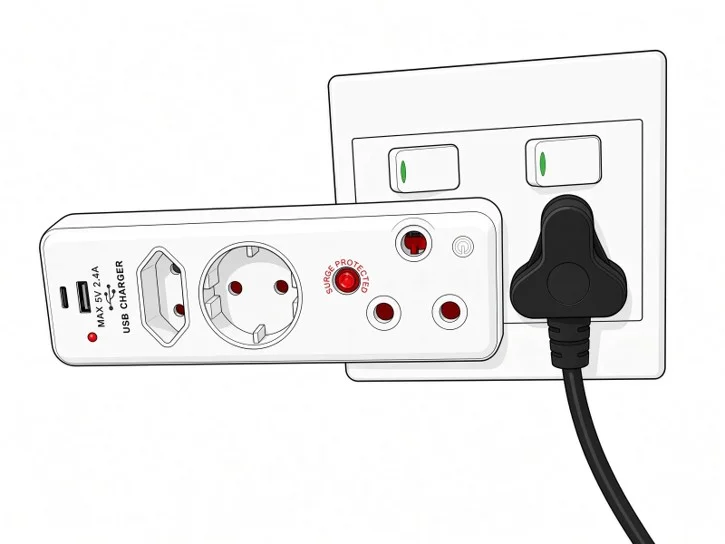
Figure 2
Neighbouring wall outlet remains free.
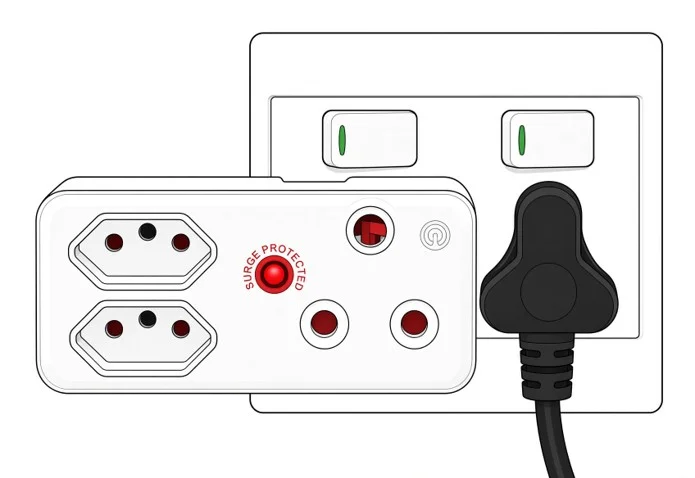
Figure 3
The body does not cover the neighbouring wall outlet or the switches.
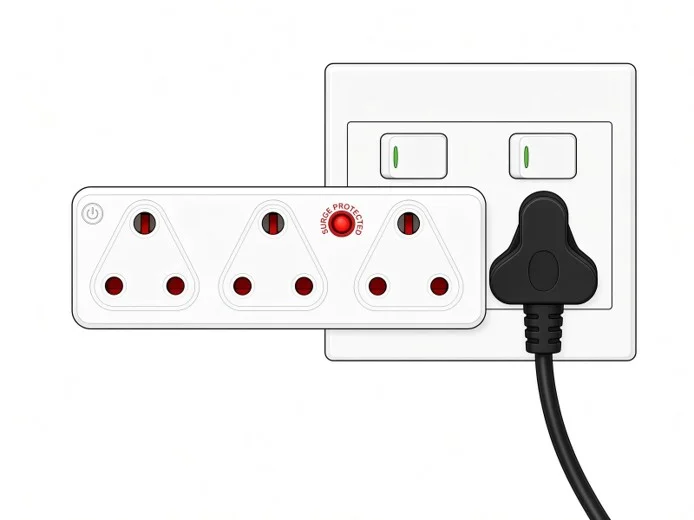
Figure 4
Second wall outlet remains in use.
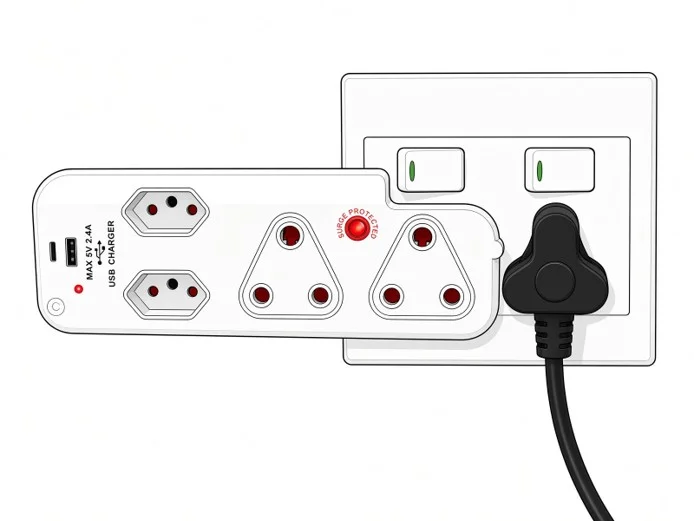
Figure 5
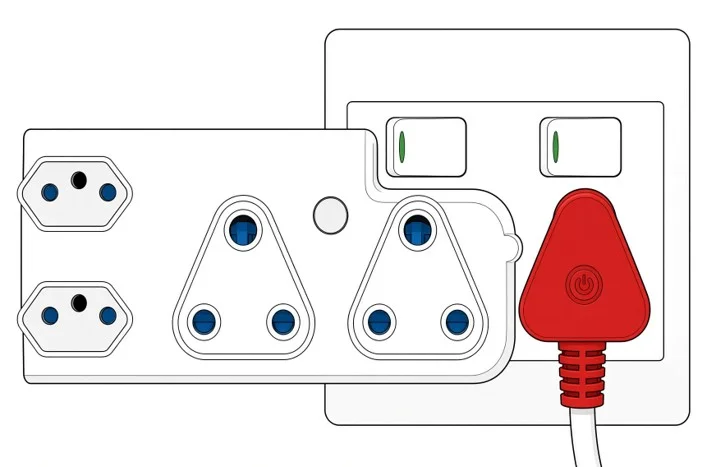
Figure 6
The indicator sits between the two faces, and the neighbouring outlet is unobstructed.
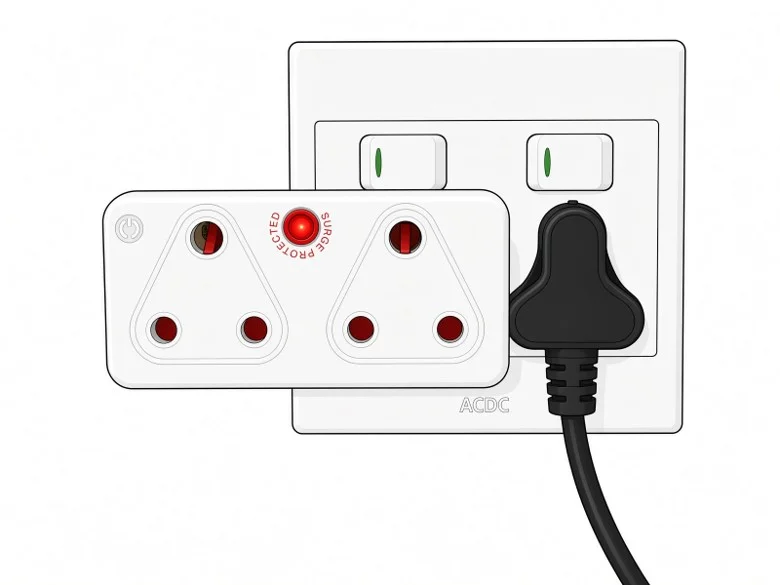
Figure 7
Adjacent wall outlet remains in use.
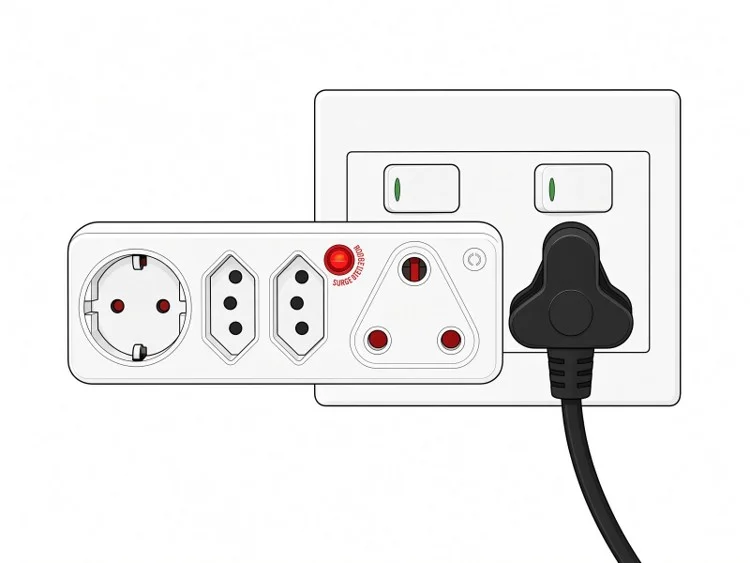
Figure 8
Adjacent wall outlet and both switches remain accessible.
Why this matters when buying electrical products
Electrical products can look very similar on the shelf or online, but that does not mean they meet the same standards.
A plug, adaptor or multiplug may appear useful because it offers more outlets or extra features, but the design still matters. If it blocks a neighbouring outlet or interferes with a switch, it can create a practical and safety concern.
Before buying or using an adaptor, take a moment to check whether it allows the wall plate to work as intended.
Look for products from brands that take compliance seriously.
Look for the Safehouse Mark where visible.
If the Mark is not on the packaging, check the Safehouse Member Directory to see whether the brand is part of the Safehouse member network.
Final takeaway
The restricted encroachment area exists to keep plugs, adaptors and switches from blocking one another.
It does not ban multiway adaptors.
It does not decide every part of an adaptor’s compliance on its own.
But it does give consumers a simple and practical way to spot one important safety issue:
When the adaptor is plugged in, the neighbouring outlet and both switches should still work as intended.
Before you buy, plug in or rely on an adaptor, ask the simple question:
Does this product leave the rest of the wall plate free and usable?
If not, it is worth choosing a better option.